Witnessing Beauty: 200-Hour Trauma-Informed Yoga Teacher Training
Trauma-Informed Teaching
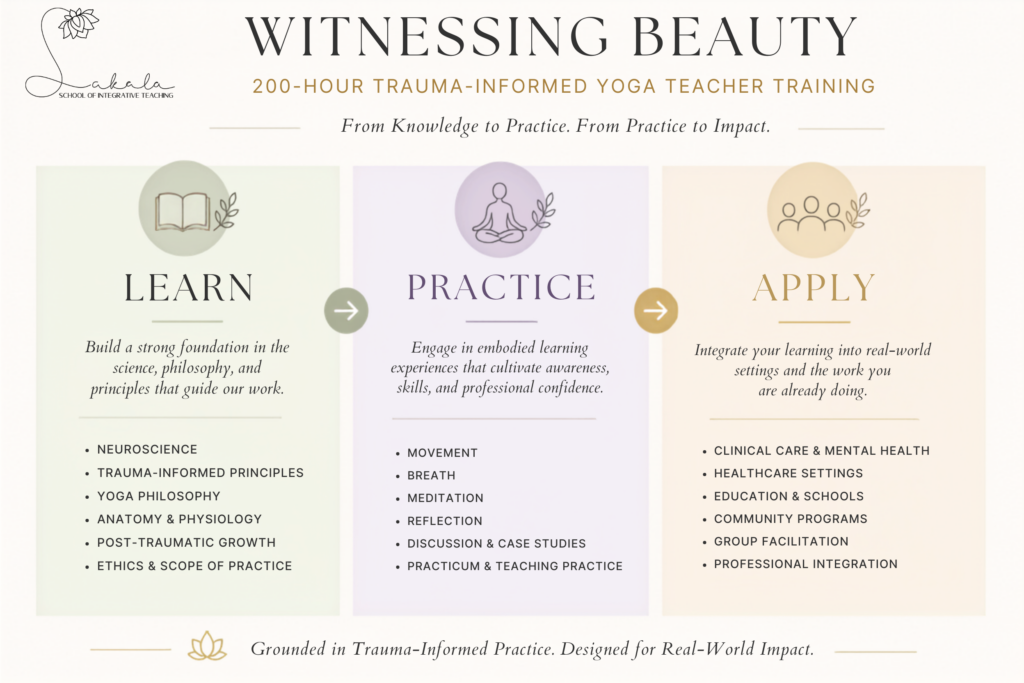
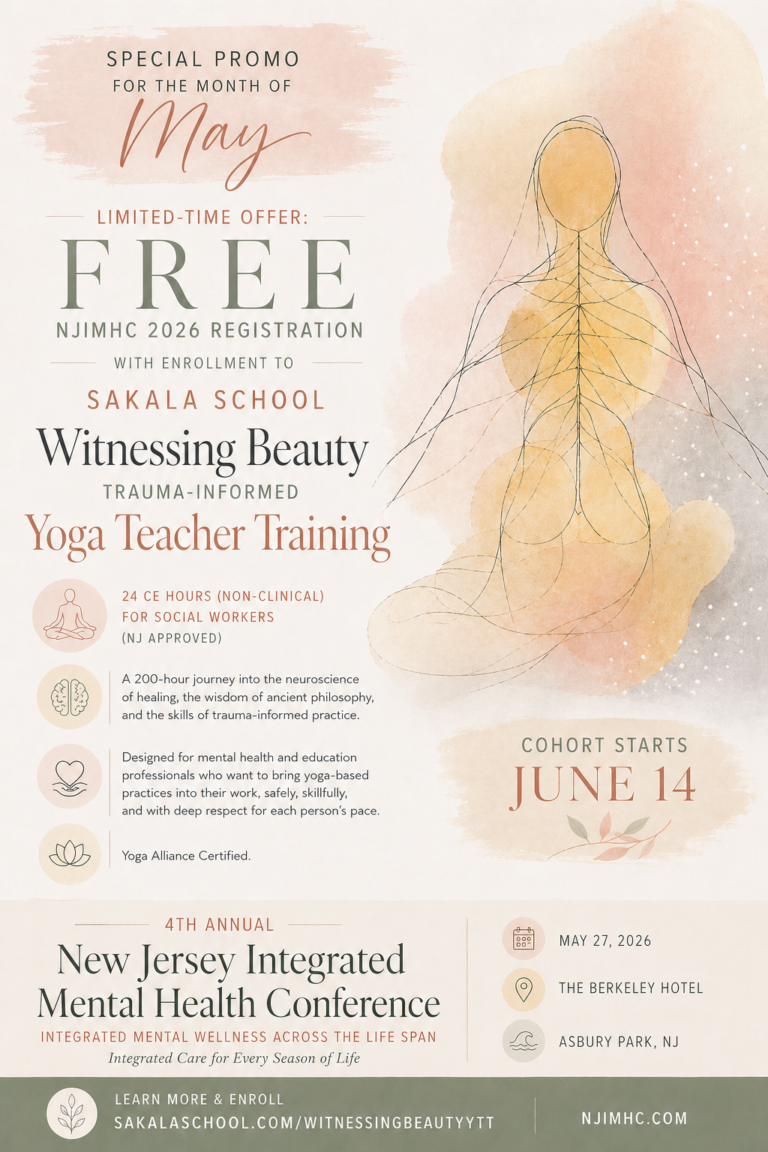
Witnessing Beauty is a 200-hour Yoga Alliance-approved teacher training that integrates yoga, neuroscience, and trauma-informed principles within a comprehensive professional curriculum.
Designed for therapists, counselors, healthcare providers, educators, yoga teachers, and helping professionals, the training explores how movement, breath, reflection, and embodied awareness can support learning, relationship, regulation, and growth.
Students learn practical approaches for integrating yoga-based practices into clinical, educational, wellness, and community settings while maintaining clear attention to ethics, scope of practice, and professional responsibility.
The curriculum emphasizes both personal practice and professional application, offering opportunities to explore how yoga-based approaches may be integrated into existing professional roles.
Yoga as an Adjunctive to Psychotherapy and Counseling
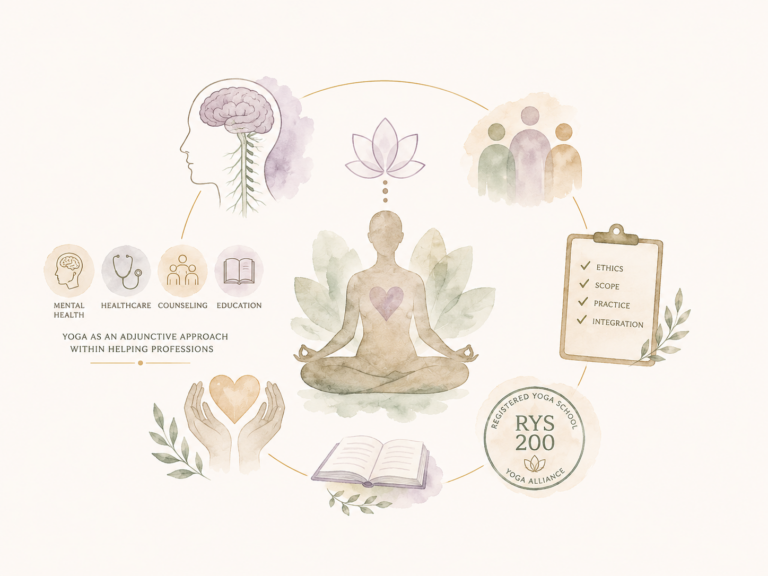
Witnessing Beauty was developed with particular attention to the growing integration of yoga-based approaches within psychotherapy, counseling, healthcare, and related helping professions.
Throughout the training, students explore how movement, breath, nervous system awareness, communication, reflection, and embodied learning may be incorporated into professional practice in ways that remain responsive to the needs of the individuals and communities they serve.
The curriculum draws upon:
The Five Pillars of Post-Traumatic Growth
Experiential and applied learning methodologies
Trauma-informed principles for facilitation and relationship-centered practice
Discussion, case studies, practicum experiences, and real-world application are woven throughout the training to support meaningful translation into professional practice.
Applied Anatomy, Physiology & Neuroscience
The curriculum integrates anatomy, physiology, movement science, and neurobiology to provide a foundational understanding of the mechanisms that influence regulation, adaptation, behavior, and health.
Students explore the interrelationship of major body systems, including the musculoskeletal, nervous, endocrine, cardiovascular, respiratory, and digestive systems, and examine how these systems respond to stress, movement, environment, and patterns of adaptation.
This scientific foundation is studied alongside yoga philosophy, history, and ethics, supporting a multidimensional approach to teaching, facilitation, and professional practice.
Practicum and Teacher Development
Students have opportunities to integrate the concepts explored throughout the training through discussion, reflection, practice teaching, and practicum experiences.
The practicum serves as a bridge between theory and application, allowing students to explore how neuroscience, yoga, trauma-informed principles, communication, and facilitation skills come together in real-world settings.
Throughout the process, students are encouraged to develop an authentic teaching voice while cultivating presence, curiosity, cultural humility, and professional integrity.
Sakala School’s Trauma-Informed Framework draws upon SAMHSA’s six guiding principles: safety, trustworthiness, peer support, collaboration, empowerment, and cultural humility.
Sakala School of Integrative Teaching is a registered school with Yoga Alliance, and the 200 Hour Trauma-Informed curriculum is approved and compliant with Yoga Alliance’s elevated standards for yoga teacher training.
Yoga Alliance ID: 358368
This training is eligible for 200 Hours of Continuing Education Credits through Yoga Alliance if you are already a Registered Yoga Teacher but wish to add a Trauma-Informed component to your training.