This 200-hour in-person training covers five core curriculum areas:
Techniques, Training & Practice: Asana, Pranayama & Subtle Body, Meditation
Anatomy & Physiology
Yoga Humanities: History, Philosophy, Ethics
Professional Essentials
Case Studies & Practice Teaching
Is this training for beginners?
Yes. This training welcomes individuals at all levels of yoga experience, including those new to practice and those seeking to deepen or specialize in trauma-informed approaches.
Who certifies my training?
Yoga Teacher Training certification is awarded through Sakala School of Integrative Teaching. Graduates are eligible to register with Yoga Alliance as an RYT-200.
Is this training approved for continuing education (CE)?
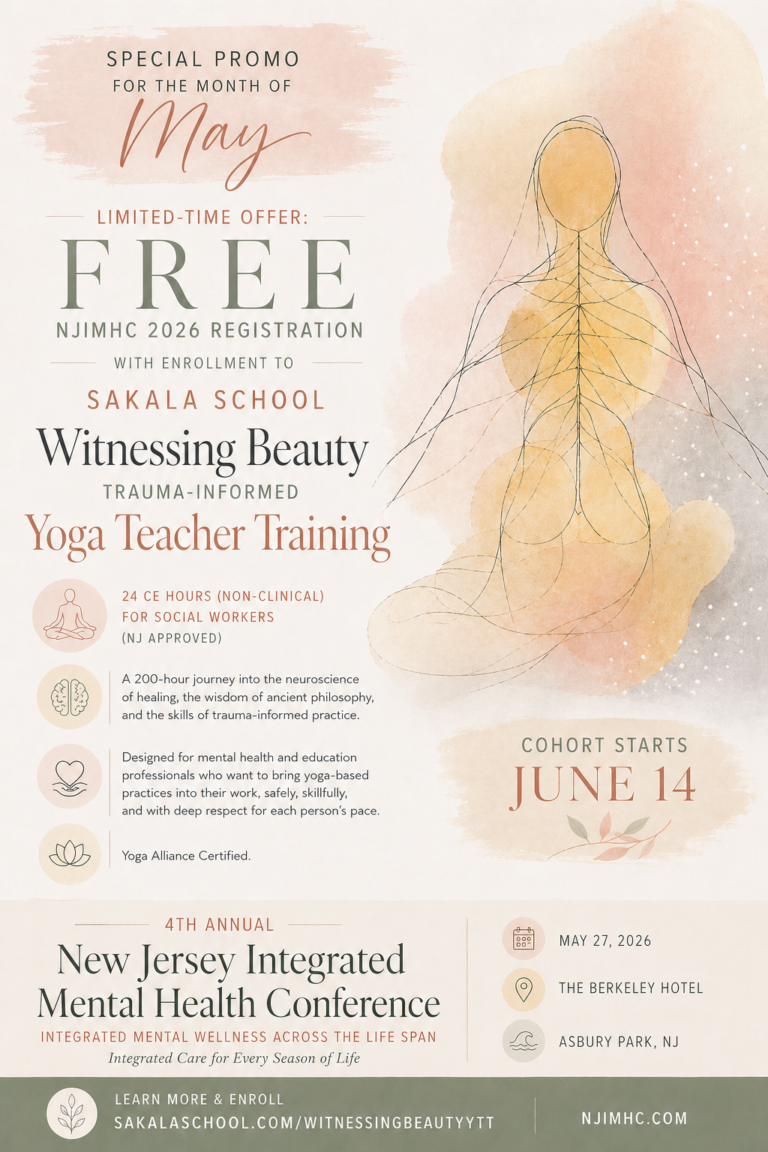
Yes. This course, Trauma-Informed Yoga Teacher Training (24 CE Hours – Non-Clinical), Approval #033022026-140, provided by Sakala School of Integrative Teaching, is approved for continuing education by the New Jersey Social Work Continuing Education Approval Collaborative. The approval period is March 30, 2026 through August 31, 2028. New Jersey social workers are eligible to receive 24 CE credits for participating in this course. Professionals in other states or disciplines are encouraged to check with their licensing board regarding eligibility for CE credit.
For current Yoga Alliance approved yoga teachers, this training is eligible for continuing education hours through Yoga Alliance. Participants are responsible for submitting hours according to Yoga Alliance requirements.
What do I get with my tuition?
Tuition includes:
200 in-person teaching hours
Online homework forum
Sakala School printed training manual
Sakala School card deck
Structured opportunities for experiential learning, reflection, and applied practice
Upon full attendance and completion of all material, eligibility to register with Yoga Alliance as a certified RYT-200 Yoga Teacher
Is this training for me if I have a medical condition?
This training is trauma-informed and body-respectful. If you have a specific medical condition, we can explore approaches that accommodate your needs. If you are receiving treatment for a diagnosed condition, we ask that your provider sign a release confirming your participation and offering any guidance regarding limitations.
What are the prerequisites for participating in this teacher training?
This training is designed for professionals working in health, mental health, education, and community-based settings. Participants include licensed clinicians, educators, yoga teachers, and individuals integrating trauma-informed practices into their professional work. No prior yoga or philosophy experience is required.
Do I need to be a therapist to take this training?
No. This training was developed with a strong foundation in clinical frameworks and is approved for continuing education for social workers. It is taught through case-based and observational perspectives that reflect this orientation. While many participants come from clinical backgrounds, the training is not limited to therapists. Professionals from education, yoga, and community-based settings also attend and engage with the material. The focus is on developing trauma-informed awareness, language, and facilitation skills within this framework.
Will I be qualified to teach yoga to people with trauma histories after this training?
Graduates leave with a strong foundation in trauma-informed principles and facilitation skills. This training prepares you to offer yoga-based practices in ways that prioritize choice, consent, and safety. As with any clinical skill, ongoing consultation, supervision, and continued education are encouraged as you deepen your practice.
How Will My Clients Benefit?
This training supports professionals working with individuals, groups, or communities across a range of settings. The U.S. Department of Health and Human Services notes that yoga practices may help:
Improve quality of life
Decrease stress
Support restful sleep
Bring balance to mental and emotional health
Reduce somatic symptoms, including pain
Develop portable self-regulation skills
Because yoga practices are varied, the philosophies and methods explored in this training can be adapted for clients of all ages and diagnoses, in both in-person and virtual settings.
Will there be assignments and reading outside of classroom hours?
Yes. Weekly homework supports deeper integration of the material. Assignments engage both cognitive and somatic ways of knowing, pairing reflective thinking with experiential practice.
A virtual platform supports collaboration and shared learning throughout the training. Books and additional readings will be assigned, and a daily self-care practice is woven into the curriculum as part of the integration process. Practice teaching is also a required component.
How many hours per week should I expect to dedicate outside of training sessions?
Weekly homework typically requires 3-5 hours outside of classroom time. This includes reading, reflective assignments, experiential practices, and preparation for practice teaching. A daily self-care practice is also part of the curriculum and can be integrated into your existing routine.
What is the difference between RYT and C-IAYT certification?
RYT (Registered Yoga Teacher): A 200-hour training through a Yoga Alliance Registered Yoga School is the starting point for yoga teaching certification. Students may continue with additional 300- and 500-hour trainings for advanced standing.
C-IAYT (Certified Yoga Therapist): Offered through the International Association of Yoga Therapists, this certification requires 1,000 hours of training focused on therapeutic application, completed through a recognized yoga therapy school.
A 200-hour training is the foundation for either path.
What if I need to miss a session?
Full attendance is required to receive certification. Please review the training dates carefully before enrolling to ensure you can be present for all sessions.
If an unavoidable conflict arises, make-up sessions are available at an hourly rate. These must be scheduled in advance and completed before certification can be awarded. This policy allows me to offer the training sustainably while honoring the commitment every participant makes.
How large are the training cohorts?
Our training cohorts are intentionally small to foster deep connection, individualized attention, and a sense of safety.
Is ongoing mentorship available during or after the training?
Yes. For students seeking additional support, personalized mentorship sessions are available as an add-on. These 45-minute sessions can be scheduled during the training or after graduation and offer:
One-on-one guidance tailored to your questions and goals
Personalized feedback on teaching, sequencing, or client work
Support as you integrate trauma-informed principles into your setting
Mentorship sessions can be purchased individually or in packages.
Are payment plans available?
Yes. Payment plans are available. Full payment must be complete before certification is awarded.
I have more questions not answered here
Please reach out using the “Contact” button, or email: hello@sakalaschool.com